
XIAMEN ACEY NEW ENERGY TECHNOLOGY CO., LTD.

Categories
New Blog
How Are LiPo Drone Battery Packs Assembled? | UAV Battery Pack Guide
August 14 , 2026How Are LiPo Drone Battery Packs Assembled? A Step-by-Step Production Guide
LiPo pouch cells are widely used in drone and UAV battery packs because they allow flexible pack designs while keeping weight relatively low. Depending on the application, a drone battery may also need to handle high discharge current, frequent charge-discharge cycles and different series-parallel configurations.
Building the pack involves more than connecting several cells together. The cells first need to be tested and matched, then prepared and welded according to the pack design. After the BMS, wiring and other components are installed, the finished pack goes through electrical testing and charge-discharge aging before final inspection.
For companies setting up or upgrading a drone battery production line, the first step is to understand how these processes connect and which equipment is required at each stage.
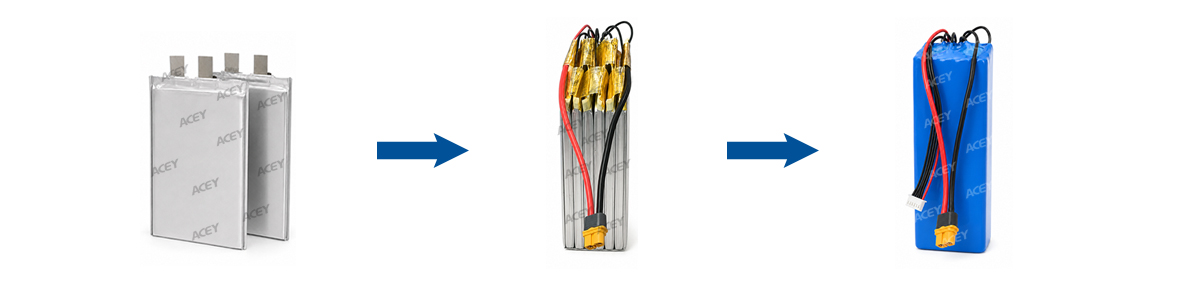
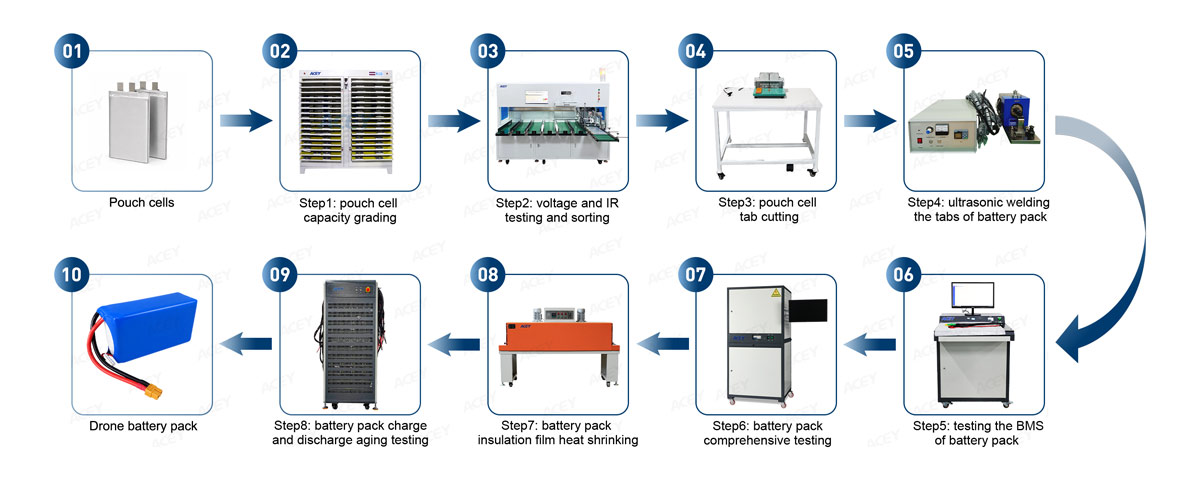
Equipment selection should be based on the actual pouch cell size, pack voltage and capacity, series-parallel configuration, maximum current, tab material, BMS and required production output.
What Equipment Is Needed to Assemble a Drone Battery Pack?
A semi-automatic pouch battery pack line can be divided into several independent production stations.
Process
Equipment
Main Function
Cell Grading
Battery Cell Capacity Grading Machine
Charge-discharge testing and capacity grading
Cell Matching
Pouch Cell Sorting Machine
Voltage and internal resistance testing and sorting
Tab Preparation
Pouch Cell Tab Cutting Machine
Cuts positive and negative tabs to the required dimensions
Cell Connection
Ultrasonic / Laser Welding Machine
Connects pouch cells according to the pack design
BMS Testing
BMS Testing Machine
Checks protection and communication functions
Pack Testing
Battery Comprehensive Tester
Tests the electrical performance of the assembled pack
Aging
Battery Pack Aging Machine
Runs programmed charge-discharge cycles
1. Pouch Cell Capacity Grading
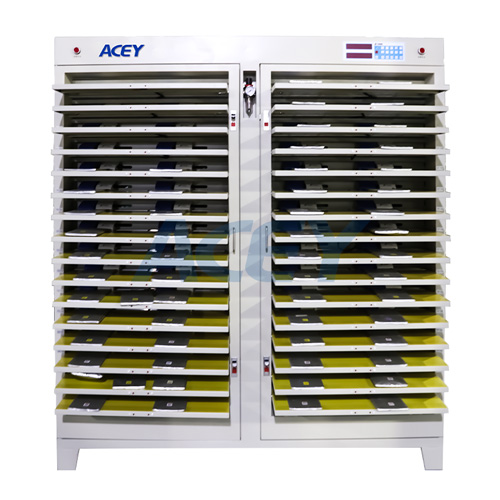
Before pack assembly starts, the pouch cells can be charged and discharged to measure their actual capacity.
Cells from the same production batch are not always completely identical. Capacity grading provides test data that can be used when selecting cells for the same battery pack.
ACEY battery cell capacity grading machine can be configured with:
The current range and channel configuration are selected according to the cell specification and production requirement.
2. Voltage and Internal Resistance Sorting
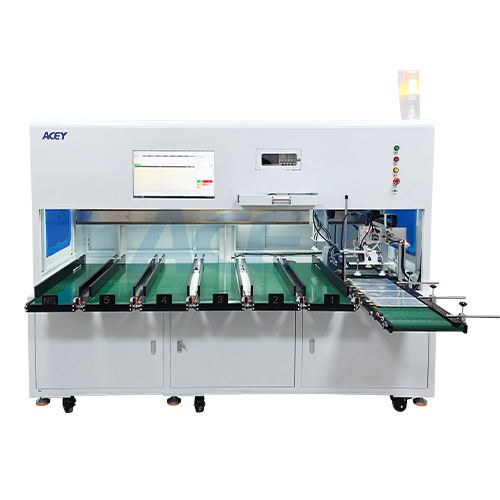
After capacity grading, cells can be checked again for voltage and internal resistance.
At this stage, cells with similar electrical characteristics are grouped together before pack assembly. Cells outside the set limits can be separated into the NG channel.
ACEY pouch cell sorting equipment can be configured for automatic testing, grading and collection.
Key specifications include:
The fixtures can also be changed or customized when the same production area needs to handle more than one pouch cell size.
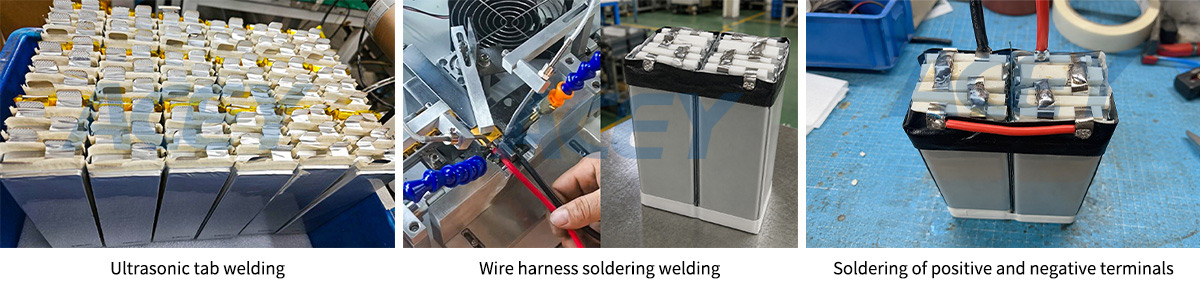
3. Cutting the Pouch Cell Tabs
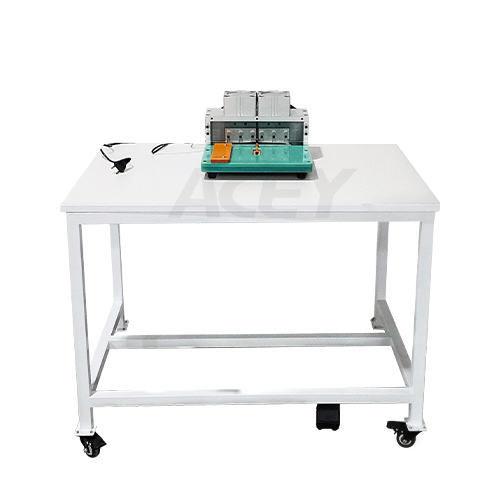
Once the cells have been graded and matched, the positive and negative tabs may need to be trimmed before welding.
Tab length and position are determined by the battery pack structure. Consistent tab dimensions also make cell positioning and welding easier to control.
ACEY-PTC560 pouch cell tab cutting machine covers:
After tab cutting, the cells are arranged according to the required series-parallel configuration and positioned in a fixture for the next assembly step.
4. Connecting the Pouch Cells
The welding process is selected according to the cell tabs, connecting material and battery pack structure.
For pouch battery packs, ACEY can provide both ultrasonic metal welding and laser welding solutions.
*Ultrasonic Welding
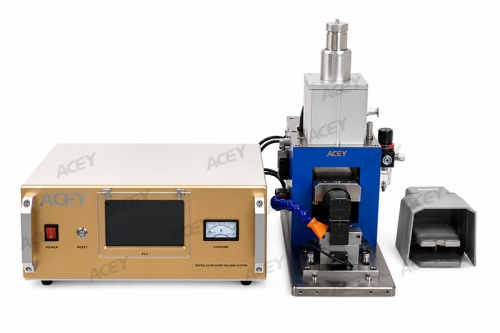
Ultrasonic metal welding machine uses high-frequency mechanical vibration together with pressure to join the metal layers.
For the configuration listed in this drone battery pack solution, the equipment can be used for two-layer welding of approximately 0.2 mm aluminum or nickel-coated copper material.
The system supports:
The welding horn, fixture and process parameters are matched to the customer's actual materials.
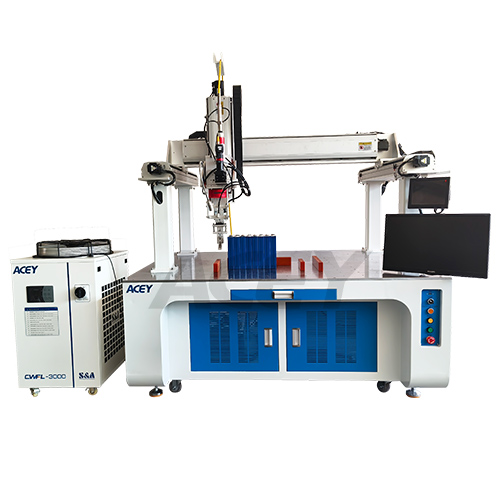
Laser welding is another option when the tab and connecting structure are suitable for a laser process.
ACEY-LWM series laser welding machines for this application are available with:
The system can be configured with:
For either welding process, the material combination needs to be checked first. Tab material, thickness, number of welded layers, overlap design and weld area all affect the final equipment configuration.
When the structure is not yet fixed, testing the customer's actual tabs and connecting materials is the most practical way to confirm the welding process.
Ultrasonic Welding or Laser Welding: Which One Should Be Used?
The welding method should be chosen from the actual battery structure rather than from machine power alone.
| Item | Ultrasonic Welding | Laser Welding |
| Common Use | Pouch cell tab connection | Tab-to-connector or compatible busbar connection |
| Energy | Mechanical vibration | Laser heat |
| Materials | Aluminum, nickel-coated copper and compatible tab materials | Depends on the material combination |
| Tooling | Welding horn, anvil and fixture | Welding fixture and laser positioning system |
| Key Selection Factors | Material thickness, layers and weld area | Material, thickness, reflectivity and joint structure |
| Process Verification | Sample welding recommended | Sample welding recommended |
For direct pouch cell tab connection, ultrasonic welding is commonly evaluated first.
Laser welding can be considered when the tab-to-connector structure and material combination are better suited to laser processing.
5. BMS Installation and Testing
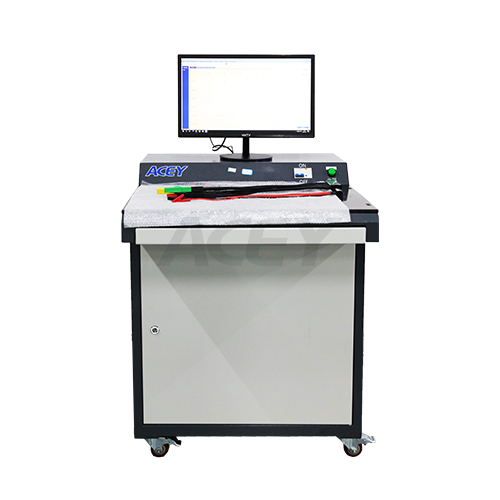
After the cells are connected, the BMS can be installed.
The BMS provides protection and monitoring functions for the battery pack. Smart BMS designs may also include communication with the drone or external system.
ACEY BMS testing equipment can be configured for hardware BMS and smart BMS applications.
Available ranges include:
For a smart BMS, the communication protocol should be confirmed when the tester is configured.
BMS testing and finished battery pack testing are two separate steps.
The BMS tester focuses on the protection board and its functions. The battery comprehensive tester is used later to check the assembled battery pack.
6. Battery Pack Assembly and Electrical Testing
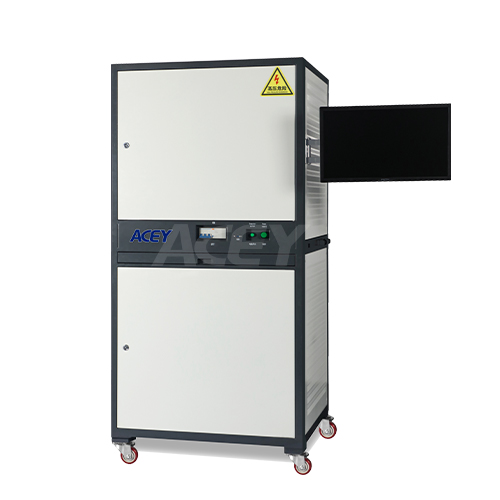
After welding and BMS installation, the remaining wiring, connectors, insulation materials and other pack components can be assembled.
The completed pack is then connected to a battery comprehensive tester.
For the ACEY-BIT series, available configurations include:
Tester voltage and current ranges should match the finished pack specifications.
This is particularly relevant for high-discharge UAV batteries. A battery may not have an especially high pack voltage, but its discharge current can still be much higher than that of many standard battery applications.
7. Charge-Discharge Aging
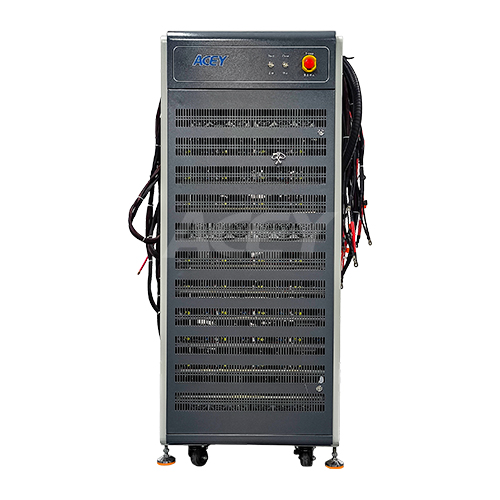
After electrical testing, finished battery packs can be transferred to the aging station.
The aging equipment runs the pack through programmed charge-discharge cycles. Test conditions can be set according to the battery manufacturer's own production and quality-control requirements.
ACEY battery pack aging machines are available with:
Cutoff conditions can be programmed by time, voltage, current, capacity and other test parameters.
The aging program, number of cycles and pass/fail limits are normally set by the battery manufacturer.
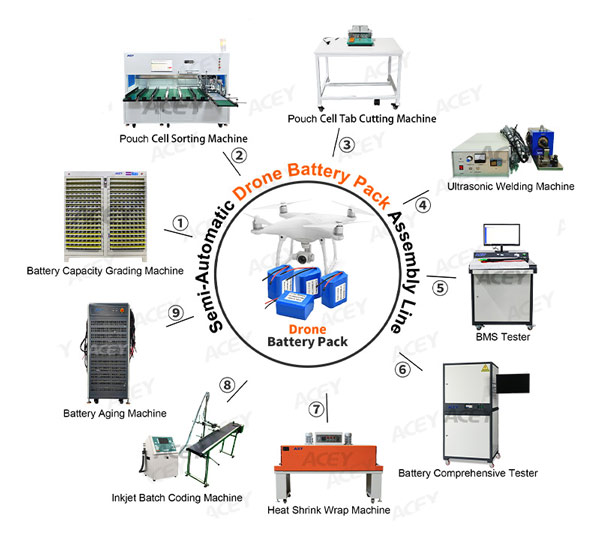
Complete Drone Battery Pack Production Flow
The full production flow can be arranged as:
These processes can be added according to the final pack structure rather than being fixed for every production line.
What Drone Batteries Can Be Produced with This Process?
The same process can be adapted to pouch battery packs for different UAV applications, including:
The application itself is not enough to select the equipment.
A 6S racing drone battery and a large agricultural drone battery, for example, can have very different cell sizes, capacity, current requirements and pack structures even though both are used in drones.
For equipment selection, the battery specification is the more useful starting point.
Why Use a Semi-Automatic Assembly Line?
A modular semi-automatic line is practical when several battery models are produced in the same factory or when production volume does not yet require a fully automatic system.
Each process uses dedicated equipment, while loading, unloading, fixture transfer and some assembly work can remain manual.
This setup works well for:
Another advantage is that equipment can be added gradually. A manufacturer that already has cell grading equipment, for example, can configure only the sorting, welding, testing or aging sections that are missing from the current line.
What Information Is Needed to Configure the Line?
To configure the equipment correctly, the battery specifications need to be confirmed first.
The most useful information includes:
These details are used to confirm the fixtures, tester ranges, welding process and other equipment configurations.
If the welding process has not yet been finalized, actual cell and tab samples can also be used for process evaluation.
ACEY Equipment for LiPo Drone Battery Pack Assembly
ACEY supplies equipment for the main stages of pouch-cell UAV battery pack production, from cell grading and sorting to tab preparation, welding, BMS testing, finished pack testing and charge-discharge aging.
The production line can be built with:
Fixtures, testing ranges, welding tooling and workstation layouts can be configured around the actual battery instead of using one fixed setup for every project.
If you are planning a LiPo drone battery pack assembly line, send us the pouch cell specifications, pack voltage and capacity, series-parallel configuration, maximum charge/discharge current, tab information, BMS details and required output. With these details, ACEY can recommend the equipment and process configuration for your battery pack.
*What type of cells can this drone battery pack line handle?
This production process is mainly designed for lithium-ion and lithium polymer pouch cells. Fixtures and testing ranges are configured according to the actual cell dimensions and electrical specifications.
703, 7F, Zhonghengji Building, No.223, Qishan North Road, Huli District, Xiamen, Fujian, China
Email : allen@xmacey.com
Tel : +8618950009155
Whatsapp : +8618950009155