ACEY-BCT530-128P energy-feedback prismatic battery charge and discharge machine can convert the electricity discharged by the battery into energy consumption for charging the battery during the process of charging and discharging the battery. The excess electricity is fed back to the factory power grid to meet the electricity needs of other facilities in the factory, or fed back to the upper power grid through a two-way meter to achieve two-way energy saving.
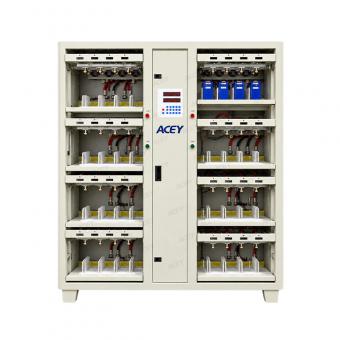
ACEY-BCT506R-512H lithium battery charge and discharge tester is designed for testing the charging and discharging performance of cylindrical lithium cells, such as 18650 21700 26650 32650 32700. It accurately measures parameters such as capacity, voltage, current, and supports programmable charge–discharge cycles for performance evaluation and quality control.
ACEY-HRCDS-6V100A-24CH battery charge discharge tester is primarily used for cycle life tests and quality control in the production or experimentation of various battery types, including lithium-ion, lead-acid, nickel-cadmium, and nickel-metal hydride batteries.
ACEY-HRCDS-6V300A-16CH is used for cycle life testing and quality control of lithium-ion, lead-acid, cadmium nickel, nickel hydrogen and other batteries. It supports various tests such as cycle life, capacity, charge discharge characteristics, charge retention, charge discharge efficiency, overcharge/overdischarge tolerance, pulse and working condition testing.
ACEY-HRCDS-5V60A-80CH battery charge discharge machine is widely used in various applications, including battery research and development, production quality control and battery recycling.
ACEY-HK3560 battery voltage and ir tester is suitable for low-resistance batteries, large-capacity lithium battery packs, and rapid product classification on production lines.
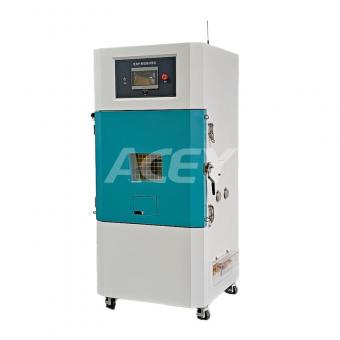
ACEY-6007C battery nail penetration test machine is used to simulate extreme scenarios where batteries are punctured by sharp objects during transportation and use. It detects whether the battery will experience safety issues such as fire, explosion, or leakage, thereby evaluating the battery's puncture resistance. It is mainly used for factory quality inspection and safety performance verification during the R&D stage of new energy batteries such as lithium-ion batteries and lithium polymer batteries. It is a key piece of equipment for battery manufacturers and quality inspection agencies to ensure battery safety.