
Language : English

English

 Automatic Battery Pack Assembly Line For ESS

Residential Energy Storage In Europe: Localization Challenges And ESS Design Solutions

May 08 , 2026
Residential Energy Storage In Europe: Localization Challenges And ESS Design Solutions


In the global deployment of residential energy storage systems, the European market presents differentiated adaptation requirements due to its unique geographical environment, grid regulations, and user habits.
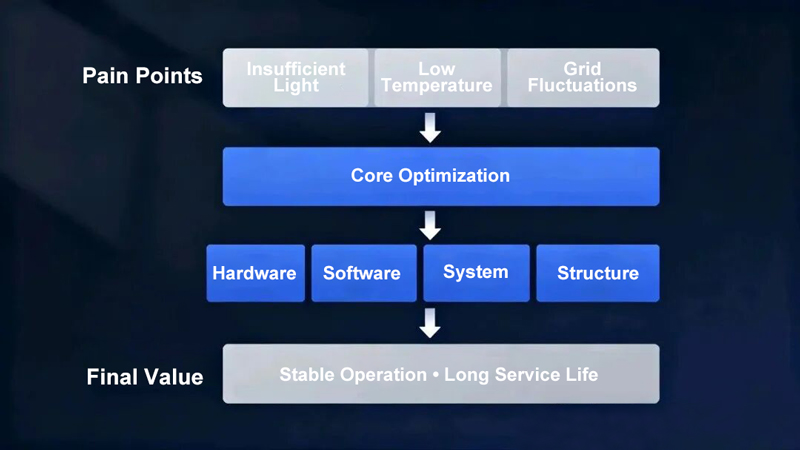
The core causes of residential energy storage battery failures in Europe can generally be summarized into three dimensions:
  • Environmental constraints
  • System coordination
  • Localization adaptability


Environmental Challenges: Limited Solar Resources and Low-Temperature Impacts

From the perspective of the natural environment, insufficient and fluctuating sunlight intensity often makes photovoltaic self-generation unable to fully charge the battery system. Long-term operation under partial charge/discharge cycles or low SOC conditions accelerates battery capacity degradation and internal resistance increase.

In addition, low winter temperatures further reduce charging and discharging efficiency while amplifying SOC calibration errors.

Grid Compatibility Challenges Across Europe

On the grid side, European countries have varying grid standards, frequent voltage and frequency fluctuations, and strict grid-connection policies.

Requirements such as:
  • Anti-islanding protection
  • Power limitations
  • Grid compliance controls

can easily interrupt battery charging and discharging processes.

Combined with communication mismatches between bidirectional smart meters and the BMS, these issues further aggravate:
  • Undercharging problems
  • SOC misjudgment
  • System instability

User Scenario Requirements in the European Market

Beyond environmental and grid-related challenges, European households also impose higher expectations on residential ESS products.

Key challenges include:
  • Frequent use of high-power household appliances
  • Limited installation space in residential buildings
  • Strong user preference for product aesthetics
  • Demand for convenient installation and maintenance

These practical application scenarios require much stronger localization capability from energy storage products.

Core Design Logic for Next-Generation European Residential ESS Products

To address these challenges, the next generation of European residential energy storage products should be built around the core logic of:

“Localized Adaptation + Full Lifecycle Protection”

This requires coordinated innovation across:
  • Hardware design
  • BMS software architecture
  • System-level communication
  • Structural and thermal design

1. Hardware Optimization: Building a More Durable Battery Foundation

At the hardware level, cell selection should focus on:
  • Low-temperature tolerance
  • Long cycle life
  • Low internal resistance
  • High energy density

Dedicated battery cells optimized for low-charge/high-discharge operating conditions should be prioritized.

In terms of battery pack architecture, manufacturers should adopt:
  • Small modular pack design
  • Active + passive balancing systems
  • Real-time cell consistency calibration

This helps prevent overcharge and overdischarge of individual cells.

Meanwhile, the battery pack should integrate:
  • Low-temperature preheating circuits
  • Low-SOC sleep protection mechanisms

These hardware-level protections can effectively prevent permanent battery damage.

2. Software Optimization: Localized Reconstruction of the BMS

The software core lies in the localized reconstruction of the BMS.

A multi-dimensional SOC calibration model should be established by integrating:
  • Voltage data
  • Current data
  • Temperature data
  • Cycle count data
  • Solar irradiance forecasting data

This enables dynamic calibration and keeps SOC error within 3%.

At the same time, different parameter packages should be preset according to the grid standards of different European countries, including optimization of:
  • Low-temperature charging cutoff voltage
  • Adaptive thresholds for grid fluctuations
  • Local grid compliance strategies

In addition, the system should introduce:
  • High-power load recognition
  • Intelligent power scheduling functions

This prevents the battery system from independently bearing excessive peak discharge pressure.

3. System Coordination: Full-Link Communication and Energy Scheduling

At the system coordination level, full-chain communication among:
  • PV systems
  • PCS
  • BMS
  • Smart meters

must be deeply integrated.

A redundant multi-protocol communication architecture should be adopted to achieve millisecond-level data synchronization.

Meanwhile, PCS performance should be upgraded through:
  • Enhanced weak-light MPPT tracking capability
  • Wider input voltage ranges
  • Improved charging efficiency under unstable solar conditions

To maximize photovoltaic utilization, the system should also integrate:
  • Regional solar irradiance forecasting
  • Time-of-use electricity pricing algorithms
  • Predictive charging/discharging scheduling

This allows proactive energy management and reduces unnecessary energy losses.

4. Structural Design: Balancing Environmental Protection and Installation Flexibility

Structural design should balance:
  • Environmental adaptability
  • Installation convenience
  • Thermal management performance
  • Product aesthetics

The battery enclosure should adopt:
  • IP67 full-sealed protection
  • Dual heating and cooling thermal control systems

This ensures the battery compartment remains within the optimal operating temperature range of 5°C to 35°C.

To adapt to compact European residential environments, manufacturers should optimize product form factors with:
  • Ultra-slim structures
  • Modular architecture
  • Wall-mounted solutions
  • Floor-standing solutions

At the same time, maintenance processes should be simplified through:
  • Local fault diagnosis
  • Remote firmware upgrade capability
  • Easier operation and maintenance workflows

Conclusion

Ultimately, the global deployment of residential energy storage products is fundamentally about systematically solving scenario-based challenges.

The core optimization logic for the European market lies in moving beyond generalized product design and instead anchoring development around localized application pain points.

Through comprehensive upgrades in:
  • Hardware customization
  • Software adaptation
  • System coordination
  • Structural optimization

manufacturers can achieve deep compatibility between products, local environments, grid systems, and user habits.

This localization-oriented development approach also provides a valuable reference framework for residential energy storage deployment in other regional markets worldwide.

Acey New Energy is a professional supplier specializing in energy storage battery pack assembly production solutions. We provide comprehensive manufacturing equipment and turnkey solutions for residential ESS, commercial & industrial energy storage systems, and lithium battery pack production.

Our main products include:
  • Semi-automatic battery pack assembly equipment
  • Fully automatic battery pack assembly lines
  • Battery module & PACK production solutions
  • Laser welding and testing equipment
  • Aging, sorting, and BMS testing systems
  • Customized ESS manufacturing solutions


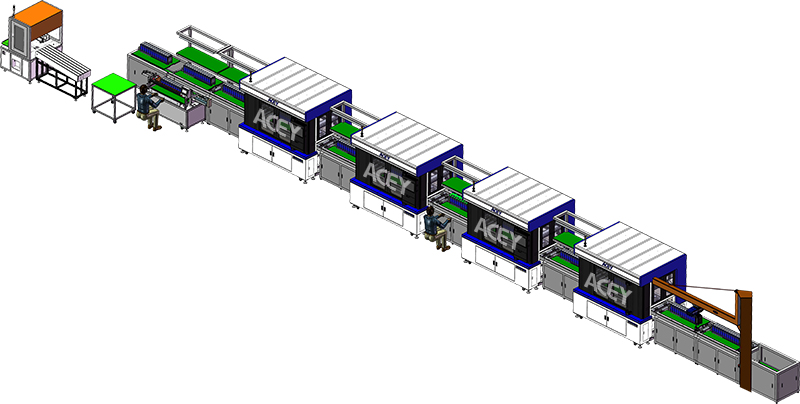
Fully automatic battery pack assembly line


With extensive experience in lithium battery manufacturing and energy storage production, Acey New Energy helps global customers build efficient, stable, and scalable production systems tailored to different regional market requirements.

From laboratory-scale development to mass production deployment, we provide one-stop solutions covering:
  • Production line planning
  • Equipment integration
  • Technical support
  • Process optimization
  • After-sales service

As residential energy storage products continue evolving toward localized adaptation and intelligent manufacturing, Acey New Energy remains committed to supporting customers worldwide with reliable equipment, advanced automation technologies, and professional turnkey ESS production solutions.
Leave a message
Leave a message
If you are interested in our products and want to know more details,please leave a message here,we will reply you as soon as we can.

Home

Products

contact

whatsApp