How to Calculate Ah, C-Rate, and Current in Residential Energy Storage Systems
In the testing, data integration, and product definition of residential energy storage systems, understanding core battery parameters is the foundation of all work. In many cases, inconsistencies between cloud platform data and actual hardware performance are not due to device faults, but rather a lack of clarity in the underlying parameter logic. This article, in the form of standardized study notes, systematically organizes the most critical and commonly confused concepts in residential storage products—cell capacity, C-rate, current, voltage, and series-parallel configuration—along with formulas and real calculation cases, to help industry practitioners build a complete parameter knowledge framework.
1. Cell Capacity (Ah): The Foundation of All Calculations
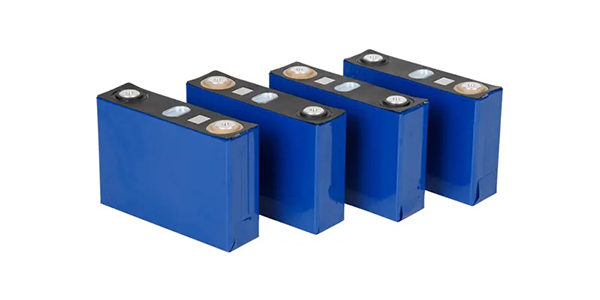
Cell capacity is the most fundamental physical parameter of a battery, measured in ampere-hours (Ah). It represents the battery’s ability to continuously discharge at a rated current. Simply put, Ah determines “how much energy the battery can store” and is the starting point for all current, power, and energy calculations.
Common industry cell capacities include 280Ah, 314Ah, 340Ah, etc. These are fixed hardware parameters specified by the cell manufacturer in the datasheet and cannot be modified via software.
2. C-Rate: The Core Rule Determining Charge/Discharge Speed
C-rate (charge/discharge rate) is the key coefficient linking capacity and current. It defines the maximum allowable safe operating current of a battery. Different types of cells have fixed safe C-rates, and residential energy storage products typically adopt low C-rate designs to ensure lifespan and stability.
Core formula:
Maximum operating current (A) = Cell capacity (Ah) × C-rate (C)
This is the most fundamental and critical formula in residential storage systems, and the primary basis for determining whether platform data is correct.
Example:
Cell capacity: 314Ah
Maximum charge/discharge rate: 0.5C
0.5C maximum current = 314Ah × 0.5C = 157A
This value represents the physical hardware limit and cannot be exceeded. If the system displays a current far above this value, it can generally be identified as a parameter configuration error.
3. Real Case: Why 314A Must Be Incorrect
In actual testing scenarios, if the cloud platform displays a maximum charge current of 314A and a maximum discharge current of 314A, it can be identified as abnormal based on parameter logic alone.
Correct logic:
-
Cell capacity: 314Ah
-
Rated C-rate: 0.5C
-
Theoretical maximum current: 314 × 0.5 = 157A
-
Platform displays 314A → this equals directly using capacity as current, a typical configuration error
This demonstrates that by mastering the underlying formulas, one can quickly verify data validity without relying on hardware testing.
4. Series (S) and Parallel (P): The Fundamental Logic of System Architecture
Residential energy storage systems do not use single cells directly. Instead, they combine cells in series and parallel to match voltage and capacity requirements—this is the fundamental design rule.
1) Series (S): Increasing Voltage
The number of cells in series determines system voltage, while capacity and current remain unchanged.
Formula:
System voltage = Single cell voltage × Number of series connections (S)
For lithium iron phosphate (LFP) cells with a nominal voltage of 3.2V, a 16S system has:
3.2V × 16 = 51.2V
2) Parallel (P): Increasing Capacity and Current
The number of parallel connections determines total system capacity and total output current, while voltage remains unchanged.
Formulas:
System capacity = Single cell capacity × Number of parallel connections (P)
System maximum current = Single cell maximum current × Number of parallel connections (P)
Example:
314Ah cell with 2P configuration:
System capacity = 314 × 2 = 628Ah
Maximum current = 157 × 2 = 314A
The series-parallel configuration directly determines overall system specifications and is the prerequisite for all parameter calculations.
5. Voltage System: The Safety Boundary of Residential Storage
Lithium iron phosphate cells have a fixed safe voltage range, which forms the basis of BMS protection logic:
-
Nominal cell voltage: 3.2V
-
Fully charged voltage: 3.65V
-
Discharge cutoff voltage: 2.5V
System voltage scales proportionally with the number of series cells. For a 16S system:
-
Nominal voltage: 51.2V
-
Fully charged voltage: 58.4V
-
Undervoltage protection: 40V
Voltage abnormalities are the primary indicator of battery faults and a key focus of cloud platform monitoring.
6. Energy (Wh) and Power (kW): Core Expressions of Product Specifications
The capacity and power ratings of residential storage products are derived from the above parameters.
1) System Energy (Storage Capacity)
Formula:
Energy (Wh) = System voltage (V) × System capacity (Ah)
Example:
51.2V × 314Ah = 16,076.8Wh ≈ 16.0kWh
2) System Power (Charge/Discharge Capability)
Formula:
Power (kW) = System voltage (V) × Maximum current (A) ÷ 1000
Example:
51.2V × 157A = 8,038.4W ≈ 8.0kW
Energy determines how long the system can run, while power determines how large a load it can support—both are key product definition metrics.
7. BMS Protection Logic: The Safety Baseline for All Parameters
The Battery Management System (BMS) sets multiple protection mechanisms based on cell parameters to ensure safe operation:
-
Overvoltage protection (OVP): Stops charging when fully charged
-
Undervoltage protection (UVP): Stops discharging when depleted
-
Overcurrent protection (OCP): Cuts off immediately when current exceeds limits
-
Overtemperature protection (OTP): Derates or shuts down under abnormal temperatures
All these protection thresholds are determined by cell specifications. The alarms, statuses, and limitation data displayed on the cloud platform are derived from real-time BMS decisions.
8. Essential Understanding: Hardware-First Principle
In residential energy storage testing and data integration, the hardware-first principle must always be :
-
The cell datasheet is the highest standard
-
C-rate, voltage range, and maximum current cannot be modified by software
-
Cloud platform data is only for display; configuration errors can cause distortion
-
All abnormal data should first be verified using formulas
In simple terms: platform data can be wrong, but formulas are never wrong.
9. Summary: A Unified Framework of Core Parameters
All parameters in a residential energy storage system revolve around the battery cell:
Ah defines capacity → C-rate defines current → series-parallel defines system structure → voltage and power define product class → BMS defines safety boundaries
By mastering formulas, understanding logic, and learning reverse calculations, practitioners can quickly identify issues in product definition, data integration, and testing validation, avoiding fundamental misunderstandings.
For professionals in the residential energy storage field, these underlying parameters are not advanced R&D knowledge, but essential foundational skills. A clear understanding of the relationships between Ah, C-rate, current, voltage, and series-parallel configuration not only improves work efficiency but also builds a professional and rigorous product evaluation framework—an essential step from beginner to advanced level.
Acey New Energy specializes in providing complete assembly equipment and one-stop solutions for lithium ion battery pack assembly line—from cell to pack—tailored to newcomers in the lithium battery energy storage field. Whether it's production line planning, equipment integration, or key stages such as battery module stacking and pressing, laser cleaning, laser welding, BMS integration, and final pack testing, we deliver reliable technical support and efficient, stable production systems. We sincerely welcome customers from all over the world and hope to be your professional and reliable partner to create a better future together.