What is The Difference Between a Separator and an Electrolyte?
In lithium-ion batteries, electrolytes and separators, together with the cathode and anode, constitute the four core materials of a battery. If the cathode and anode determine the upper limit of energy density, then the electrolyte can be regarded as the “blood” of the battery, while the separator acts as a “safety valve” that maintains order and security. Together, they determine whether lithium ions can shuttle efficiently, safely, and stably inside the battery, playing a decisive role in overall battery performance and reliability.
I. The “Blood” of Lithium Batteries — Electrolyte
As is widely recognized, the electrolyte is known as the “blood” of a lithium battery. Only after electrolyte injection does a battery truly become functional; otherwise, it is merely an empty “shell” with no real substance. One could say that the moment electrolyte is injected, it is as if a body is given a soul, instantly elevating the battery to life.
The electrolyte is a colorless and transparent liquid and a key component of lithium-ion batteries. Together with the cathode, anode, and separator, it is one of the four major materials of lithium batteries. Its primary role is to enable lithium-ion transport within the battery, making charge and discharge processes possible.
1. Composition of the Electrolyte
The lithium ion battery electrolyte is mainly composed of organic solvents, lithium salts, and additives.
These are typically carbonate-based solvents, such as dimethyl carbonate (DMC), ethyl methyl carbonate (EMC), diethyl carbonate (DEC), and ethylene carbonate (EC). In practice, multiple solvents are often blended to balance ionic conductivity, viscosity, and low-temperature performance.
Common lithium salts include lithium hexafluorophosphate (LiPF₆), lithium bis(fluorosulfonyl)imide (LiFSI), and lithium bis(trifluoromethanesulfonyl)imide (LiTFSI). Among them, LiPF₆ remains the most widely used in commercial applications.
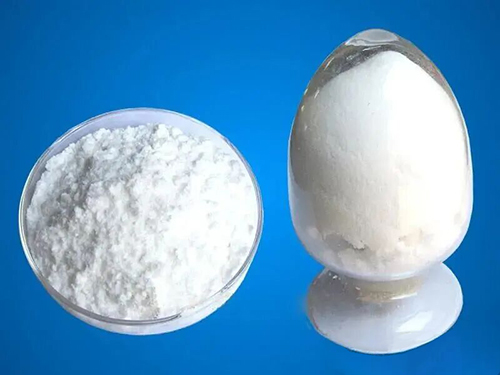
To ensure electrolyte stability, enhance charge–discharge efficiency, and improve cycle life—or to meet specific functional requirements—a small amount of additives is usually incorporated. Typical examples include:
-
Film-forming additives: fluoroethylene carbonate (FEC), vinylene carbonate (VC)
-
Additives for improving low-temperature performance: DTD
-
Flame-retardant additives: phosphate-based compounds
Although used in small quantities, additives often have a significant impact on battery performance.
2. Electrolyte Production Process
The electrolyte production process is relatively straightforward, yet it requires strict environmental control and precise process management.
According to the formulation, solvents that have undergone rigorous dehydration treatment are first added, in the required proportions, into a mixing reactor protected by an inert atmosphere (usually nitrogen). A chiller is then activated to cool the solvent mixture. Once the appropriate temperature is reached, lithium salt is slowly added while stirring to ensure complete dissolution.
During this process, the dissolution of lithium salts—especially LiPF₆—is exothermic, causing the temperature of the solution to rise. Therefore, cooling must be applied both before and during salt addition. The lithium salt must be added slowly and in small portions, with continuous monitoring of temperature to prevent excessive heating that could degrade electrolyte quality.
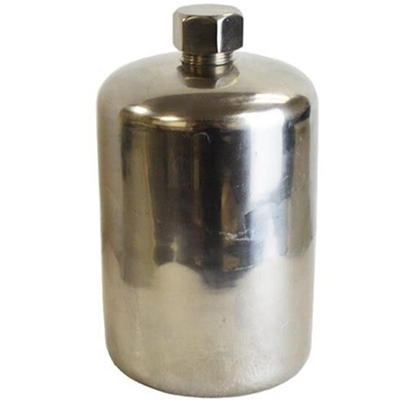
After the lithium salt is fully dissolved, the required additives are introduced and thoroughly mixed. Once sampling and testing confirm compliance with specifications, the electrolyte is pressure-filled into stainless steel containers and allowed to stand for a period before final packaging and storage.
3. Key Technical Parameters of the Electrolyte
Depending on the formulation and customer requirements, electrolyte specifications may vary. Common technical parameters include the following:
Ionic conductivity is one of the most critical properties of an electrolyte, as it directly affects lithium-ion transport within the battery. High conductivity supports high-rate and high-current charge and discharge.
Conductivity is strongly influenced by lithium salt concentration and solvent composition. Typically, electrolyte conductivity ranges from 5 to 15 mS/cm.
Density is mainly affected by solvent composition and lithium salt concentration. Higher proportions of dense solvents or higher salt content result in higher electrolyte density. The typical range is 1.0–1.5 g/mL.
Moisture is a crucial parameter, usually introduced by insufficiently dried raw materials or during processing. Excessive moisture can cause lithium salts to react with water, forming acidic species that degrade battery performance.
Moisture content is generally required to be below 10 ppm, with a maximum limit of 20 ppm.
High acidity can corrode internal battery components and trigger side reactions, leading to capacity fading and poor cycling performance.
A qualified electrolyte should be colorless and transparent. Improper operation or certain additives may cause discoloration. Battery manufacturers are usually not overly strict on color, and values below 50 are generally acceptable; higher values are considered defective.
Viscosity affects the mobility of lithium ions. Ideally, lower viscosity is preferred. Electrolytes with higher lithium salt content or higher EC content tend to have higher viscosity, while those rich in linear carbonates generally have lower viscosity.
For high-end applications, ionic impurities—especially metal ions such as copper and iron—are closely controlled. These impurities may trigger internal reactions and pose safety risks, so strict limits are imposed.
In addition to meeting the above specifications, an ideal electrolyte should exhibit a high dielectric constant, a wide electrochemical window, good electrochemical and thermal stability, low cost, non-toxicity, and high safety. However, these properties are often difficult to achieve simultaneously. For example, electrolytes with high conductivity and high dielectric constants usually have higher viscosity, and vice versa.
In recent years, the pursuit of higher energy density and the emergence of all-solid-state batteries have had some impact on the electrolyte industry. However, given the current state of solid-state battery technology, it will take a long time before they can fully replace liquid lithium batteries. In the foreseeable future, liquid lithium-ion batteries will remain dominant, and the electrolyte market is therefore expected to remain relatively stable.
II. The “Safety Valve” of Lithium Batteries — Separator
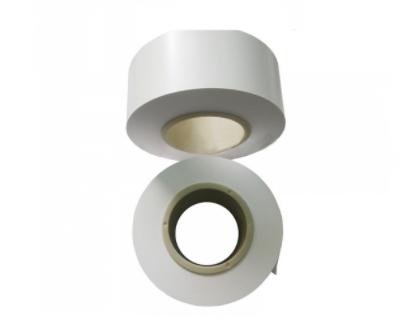
The lithium ion battery separator is another indispensable component of lithium batteries and one of the four major materials. It is typically a white, porous polymer film made of polyethylene (PE) or polypropylene (PP). Its primary function is to physically separate the cathode and anode, preventing internal short circuits.
1. Functions of the Separator
-
To isolate the cathode and anode, preventing internal short circuits
-
To provide pathways for lithium-ion transport during charge and discharge (blocking electrons while allowing ions to pass)
2. Types and Manufacturing Processes of Separators
Based on the manufacturing process, separators are mainly classified into dry-process separators and wet-process separators, each with its own advantages and disadvantages.
(1) Dry-Process Separators
Dry-process separators utilize the crystallization behavior of PP or PE under high stress. A cast film with high orientation and low crystallinity is first prepared, then stretched to form micro-defects, which are subsequently expanded through high-temperature annealing to create a uniaxially oriented porous membrane.
Melting → Casting → Heat treatment → Stretching → Finished product
Low cost and good high-temperature resistance; commonly used in conventional lithium batteries.
(2) Wet-Process Separators
Wet-process separators are typically produced using the thermally induced phase separation (TIPS) method. Polyolefins are mixed with high-boiling-point small-molecule solvents (such as paraffin oil) to form a homogeneous solution. Upon cooling, solid–liquid or liquid–liquid phase separation occurs, resulting in a two-phase structure. Biaxial stretching orients the polymer chains, by solvent extraction to obtain a microporous separator.
Raw material mixing → Extrusion molding → Stretching → Extraction → Heat setting → Finished product
Higher cost and higher tensile strength; mainly used in high-end lithium batteries.
3. Key Performance Indicators of Separators
The performance of the separator has a direct impact on battery rate capability, safety, and service life. Key indicators include:
-
Average pore size and distribution (affect lithium-ion transport)
-
Porosity (affect lithium-ion transport)
-
Thickness (affect internal resistance and energy density)
-
Wettability (affect electrolyte infiltration)
-
Tortuosity (affect lithium-ion transport rate)
-
Electrolyte uptake (affect electrolyte retention capability)
-
Electrochemical stability (non-participation in electrochemical reactions)
-
Thermal stability (affect battery safety)
-
Air permeability (affect lithium-ion transport)
A high-quality separator should offer excellent thermal stability, appropriate porosity, and strong electrolyte uptake and retention capability. Parameters such as thickness, porosity, air permeability, and pore size distribution primarily influence lithium-ion transport performance, while electrochemical stability and thermal stability are critical to battery safety.
In addition, to further enhance battery performance—especially safety and cycle life—many separator and battery manufacturers apply functional coatings to the separator surface. These include inorganic oxide coatings (such as Al₂O₃ and boehmite) and polymer coatings (such as PVDF), which significantly improve the overall performance of the separator.
III. Conclusion
As the core materials that govern lithium-ion transport and battery safety, electrolytes and separators play a decisive role in determining battery performance, lifespan, and reliability. A deep understanding of their properties, manufacturing processes, and key technical parameters is essential for battery R&D, pilot production, and large-scale manufacturing.
With extensive experience in lithium-ion battery laboratory R&D, cell manufacturing equipment, and battery pack assembly solutions, Acey New Energy is committed to supporting researchers, manufacturers, and new industry entrants in building efficient, reliable, and scalable lithium battery production lines. From material evaluation and process development to complete production line integration, Acey New Energy provides professional technical support and comprehensive solutions for the evolving lithium-ion battery industry.