Allen Tang is a Senior Lithium Battery Equipment Engineer at ACEY with 17+ years of industry experience. He has led multiple overseas turnkey projects. Drawing on ACEY’s experience delivering 400+ projects across 50+ countries, he writes practical technical guides for battery pack manufacturers, energy storage integrators, and industry partners, covering equipment selection, production line planning, assembly processes, and battery testing.
Allen Tang
Battery Sorting Machine: Why Accurate Cell Matching Matters in Lithium Battery Pack Manufacturing
As lithium batteries become increasingly important in electric vehicles (EVs), energy storage systems (ESS), power tools, consumer electronics, and drones, battery pack quality depends not only on cell quality but also on how well individual cells are matched. Even cells from the same production batch can vary slightly in voltage, internal resistance, and capacity. Without proper sorting and matching, these differences can shorten battery life, reduce performance, and increase safety risks.
A battery cell sorting machine is designed to solve this challenge by automatically testing, classifying, and grouping cells with similar electrical characteristics before they enter the battery pack assembly process.
What Is a Battery Cell Sorting Machine?
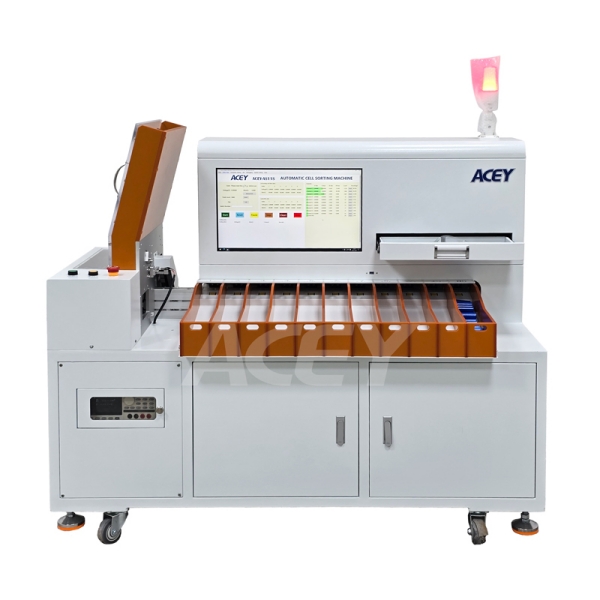
A battery cell sorting machine is an automated inspection system used to measure internal resistance and open circuit voltage of cylindrical lithium-ion cells. Based on predefined criteria, the system automatically sorts cells into different channels for matching and battery pack assembly.
Compared with manual sorting, an automatic battery sorting machine offers significantly higher accuracy, faster throughput, complete data recording, and consistent quality control.
It has become one of the essential machines in modern lithium battery manufacturing lines.
Why Is Cell Sorting Important?
Every battery cell has small manufacturing tolerances. When unmatched cells are assembled into the same battery pack, the weakest cell often limits the overall pack performance.
Proper cell sorting provides several advantages:
-
Improves battery pack consistency
-
Extends battery cycle life
-
Reduces heat generation and cell imbalance
-
Enhances charging and discharging efficiency
-
Improves product safety and reliability
-
Reduces after-sales failures and warranty costs
For manufacturers producing battery packs at scale, automated sorting is no longer optional—it is a key process for maintaining stable product quality.
How Does ACEY-AS11S Automatic Battery Sorting Machine Work?
The working process includes the following steps:
1. Automatic Cell Feeding
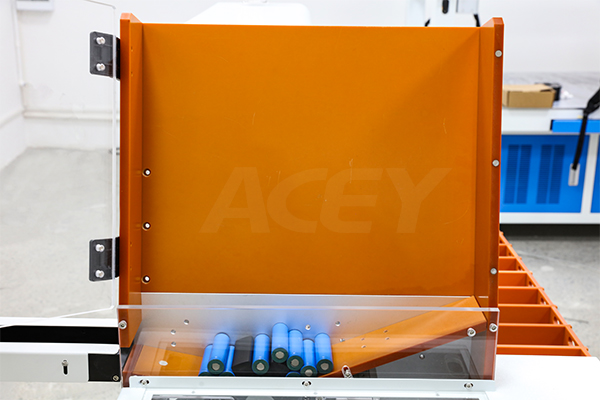
Battery cells are loaded into the hopper or feeding tray and automatically transferred to the testing position.
2. Electrical Performance Testing
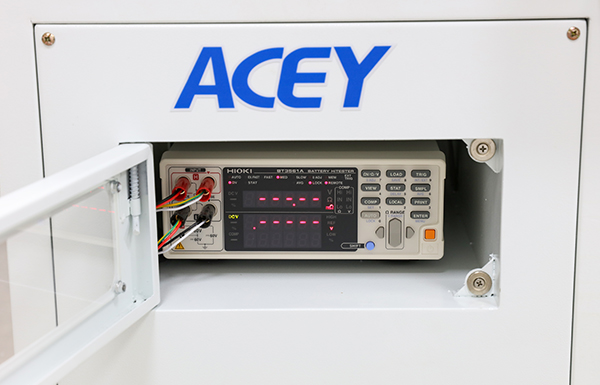
Each cell is measured using a high-precision internal resistance tester. Depending on production requirements, additional parameters such as voltage or barcode information can also be collected.
3. Data Analysis
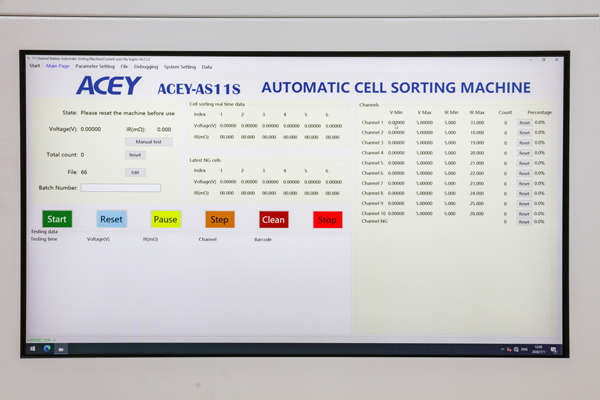
The industrial computer analyzes every measurement in real time and compares the results with preset sorting standards.
4. Intelligent Cell Classification
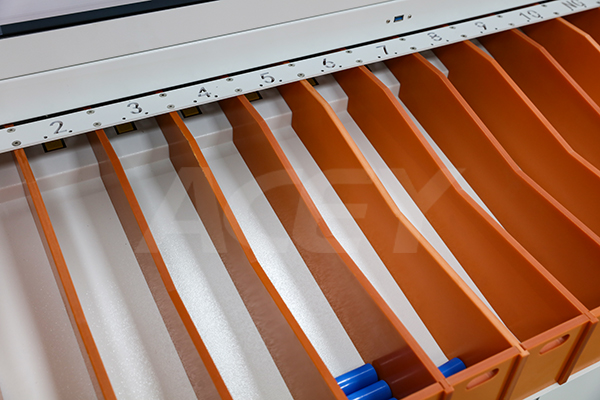
Qualified cells are automatically sorted into different collection channels according to their electrical characteristics, while defective cells are rejected separately.
5. Data Storage and Traceability
All testing results can be saved locally or uploaded to an MES system, providing complete production traceability and quality management.
Key Features of ACEY-AS11S Lithium Cell Sorting Machines
ACEY-AS11S automatic battery sorting machine offers much more than simple voltage measurement. Main features include:
High-Speed Automatic Sorting
Advanced motion control systems and precision servo motors allow the machine to process approximately 3,200 cylindrical cells per hour, greatly improving production efficiency.
Wide Cell Compatibility
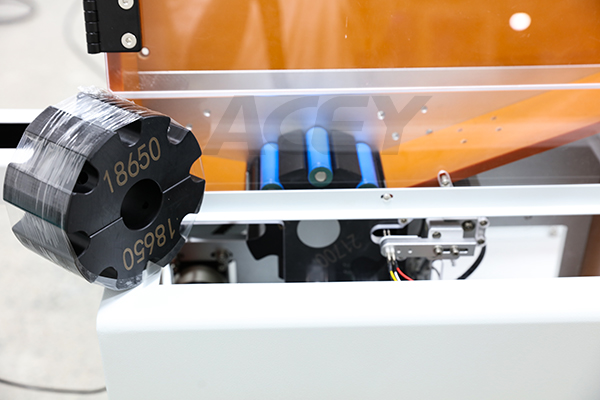
One machine can support multiple cylindrical battery sizes, including:
-
14650
-
18650
-
21700
-
26650
-
32700
Mold changeover requires only about 15 minutes, making it suitable for flexible manufacturing.
High Measurement Accuracy
By combining industrial computers with professional internal resistance testers, the system delivers highly accurate and repeatable measurement results, ensuring reliable cell grouping.
Intelligent Data Management
Production reports can be generated automatically, while testing data is stored for future analysis, quality control, and process optimization.
MES Integration
Many manufacturers now require smart factory connectivity. Modern sorting machines can communicate directly with MES systems, allowing production data collection, uploading, and centralized management.
Barcode and QR Code Traceability
Optional barcode and QR code scanning functions enable complete cell traceability throughout the manufacturing process.
Flexible Equipment Integration
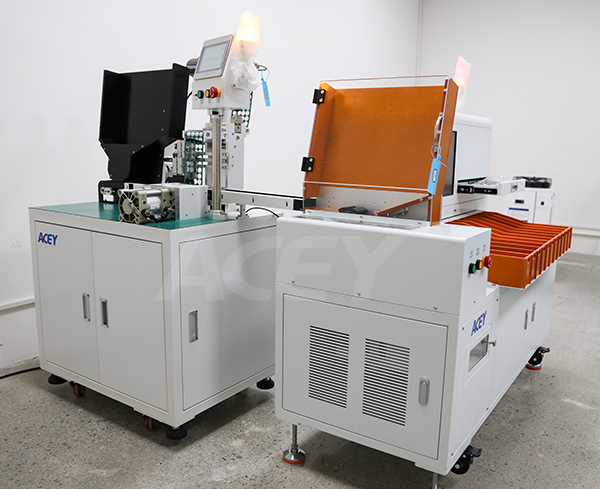
ACEY-AS11S battery sorting machine can be connected with upstream equipment such as insulation paper pasting machines and battery pack assembly lines to create a continuous automated production process.
Typical Applications
Battery sorting machines are widely used across various lithium battery pack assembly industries, including:
-
Electric vehicle (EV) battery packs
-
Energy storage systems (ESS)
-
Power tool batteries
-
Consumer electronics
-
Drone (UAV) batteries
-
E-bike battery packs
-
Medical device batteries
-
Portable power stations
Any manufacturer producing matched lithium battery packs can benefit from automated cell sorting technology.
What Should You Consider When Choosing a Battery Cell Sorting Machine?
Before selecting equipment, manufacturers should evaluate several factors:
-
Supported battery cell sizes
-
Sorting channel quantity
-
Testing accuracy
-
Production capacity
-
Changeover time
-
Data management capabilities
-
MES compatibility
-
Barcode or QR code support
-
Integration with existing production lines
-
Equipment reliability and after-sales technical support
Choosing the right machine ensures both current production efficiency and future scalability.
The Future of Battery Cell Sorting
As battery technology continues to evolve, manufacturers are demanding higher production consistency, smarter factories, and complete production traceability. Lithium cell sorting machines are becoming increasingly intelligent through advanced motion control, industrial computers, MES connectivity, and automated data analysis.
Rather than serving only as testing equipment, modern sorting machines have become an important part of digital battery manufacturing and Industry 4.0 production lines.